

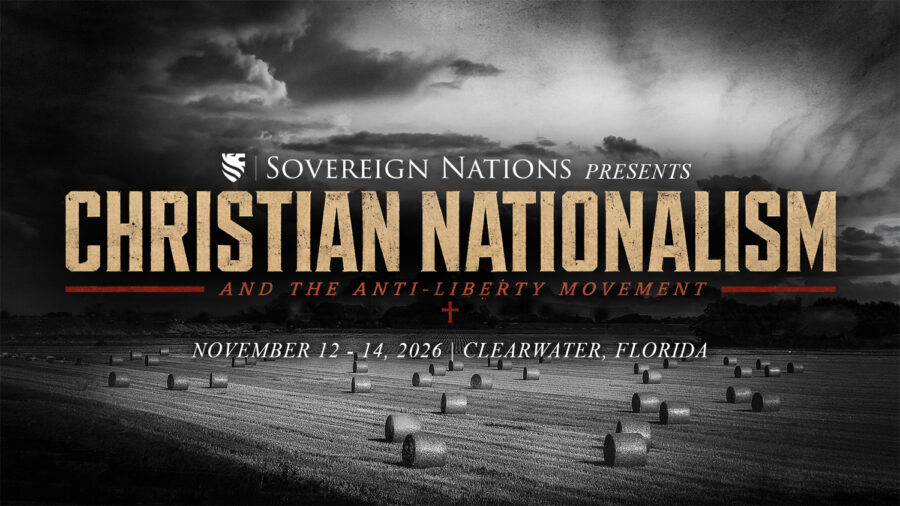
America was founded on a radical premise: that the individual is not the property of the state, the church, the party, or the mob. Our rights are unalienable precisely because they do not originate in political power—and neither does our freedom to think, reason, and speak without submission to tyranny.
Yet the political movements now calling themselves “Christian Nationalism” and the “New Right” increasingly reveal something else: illiberalism repackaged for an American audience. Behind Protestant language often sits an integralist impulse – an ambition to subordinate conscience, liberty, and civil society to a coercive religious-political order. At the same time, the familiar tools of Marxian critical theory and postmodern deconstruction are being repurposed to dissolve the American ideal itself through a “Critical America Theory”.
The emerging vision of a “New Christendom” often appears to employ a Marcusean strategy: the cultivation of what Herbert Marcuse called a “new sensibility,” or what might now be described as a new normal. In this framing, Christianity is recast less as the church’s historic vocation of proclaiming Christ, making disciples, and extending reconciliation, and more as a militant institution ordered around cultural siege and political conquest. The church becomes a fortress, and leaders are tempted to speak of “choosing violence” as though coercion were a faithful substitute for persuasion, conversion, and patient witness.
That vision risks producing not Christian renewal but fragmentation: a religious analogue to the separatist political zones celebrated by elements of the radical Left, such as Seattle’s 2020 Capitol Hill Autonomous Zone. Rather than evangelization across lines of difference, it encourages withdrawal into rival enclaves: techno-feudal mini-kingdoms organized by religious, ethnic, ideological, or sexual identity. Such a social order cannot sustain peace or genuine faithfulness as it places Christian public witness into another struggle for territorial power.
Within portions of this broader and internally diverse movement, moreover, there are troubling echoes of what Nazi Germany called “Positive Christianity.” The underlying pattern deserves sober attention: the effort to align ecclesial authority with nationalist political ambition, and to measure Christian faithfulness by its usefulness to the nation-state.
After Adolf Hitler’s accession to the chancellorship in 1933, the German Christian movement rapidly sought to consolidate church life under a national Reich Church compatible with the aims of the Nazi Party. This project required a profound theological rupture. Christianity’s Jewish roots that are integral to its Scriptures, covenantal history, and confession of Jesus as Israel’s Messiah were treated as an obstacle to be overcome in order to be aligned with the goals of the Third Reich. “Positive Christianity” supplied a doctrinal framework for a “new christianity” subordinated to racial ideology and political power.
The result was an attempted transformation of the faith into an Aryan, state-serving religion. Its proponents sought to excise alleged “Jewish influence” from Scripture and tradition, while reimagining Jesus in racialized and militant terms. As we have seen through history, whenever the church permits national identity, race, or state power to determine the content of its confession, it ceases to bear faithful witness to Christ and begins to sanctify an idol.
We face a renewed collectivism – a dangerous synthesis of Marxism, fascism, and religious authoritarianism. It offers security in exchange for conscience, unity in exchange for truth, and power in exchange for liberty.
Integralism is incompatible with the American constitutional order because it treats religious authority not as a source of persuasion and moral witness, but as an instrument of civil compulsion. Once the government is empowered to determine which theology is sufficiently orthodox, which church may speak with authority, or which citizens may fully participate in public life, religious liberty becomes a privilege distributed by those in power. The First Amendment was designed precisely to prevent that arrangement: it protects faith from the state and the state from sectarian capture.
Christian Nationalism risks repeating this same error by confusing cultural renewal with political domination. A durable Christian witness cannot be built through compelled belief, state-enforced conformity, or the use of constitutional institutions to establish religious hierarchy. Those methods do not restore a free people; they erode the Constitution’s protections for conscience, speech, association, and worship—protections that allow Americans of every faith, and of none, to live without fear of an officially empowered religious faction.
How do we preserve freedom? What path remains when so many political movements promise salvation through control?
This November join Michael O’Fallon, James Lindsay, Bill Roach, and Nick Shalna as they examine these strategically dangerous movements, expose the ideas beneath their rhetoric, and make the case for objective truth, individual liberty, and a free society:








Recent Comments